When we first moved into our home, one of our drains smelled terrible and barely drained. Our plumber recommended something I had never tried before: a drain cleaner made with beneficial bacteria!
After just one use, the odor disappeared, and the drain was working normally again.
Most people reach for a traditional drain cleaner like Drano when they notice slow drainage or unpleasant odors. However, there is another option that works differently by using beneficial bacteria to help break down organic buildup inside your pipes.
This is where bioenzyme drain cleaners come in! Instead of relying primarily on strong chemical reactions to dissolve clogs, these products use biological activity to help digest certain types of organic material over time.
It has become one of my favorite chemistry hacks for maintaining our home’s drains!
Today, I am sharing the bioenzyme drain cleaner I use, breaking down its ingredients from a chemist’s perspective, comparing it to traditional drain cleaners, and explaining a few important precautions you should know before trying it.
What Is a Bioenzyme Drain Cleaner?
A bioenzyme drain cleaner is a product that uses beneficial microorganisms, enzymes, or a combination of both to help break down organic waste inside your plumbing.
Think about everything that goes down your drains every day: food particles, grease, oils, soap residue, and other organic material. Over time, these substances can accumulate inside pipes, contributing to unpleasant odors and slow drainage.
Certain beneficial bacteria produce enzymes that break larger organic molecules into smaller compounds. Those compounds can then be metabolized by microorganisms under suitable conditions.
Examples of this would be:
- Lipases help break down fats and oils.
- Proteases help break down proteins.
- Amylases help break down starches.
Not every biological drain cleaner contains these three types of enzymes, but these examples help explain how the process works. Unlike traditional drain-opening products designed to clear certain clogs quickly, biological drain cleaners generally work more gradually, making them especially useful for ongoing maintenance and managing organic buildup.
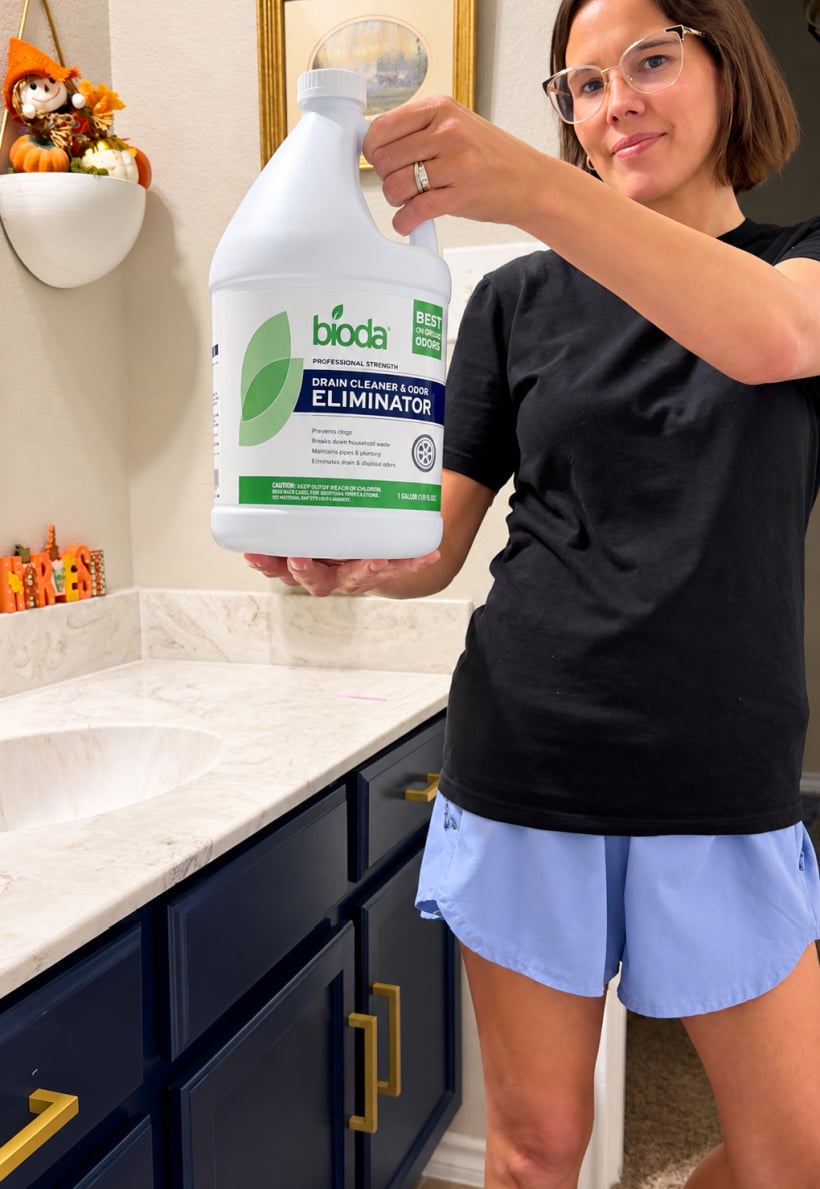
The Bioenzyme Drain Cleaner I Use in My Home
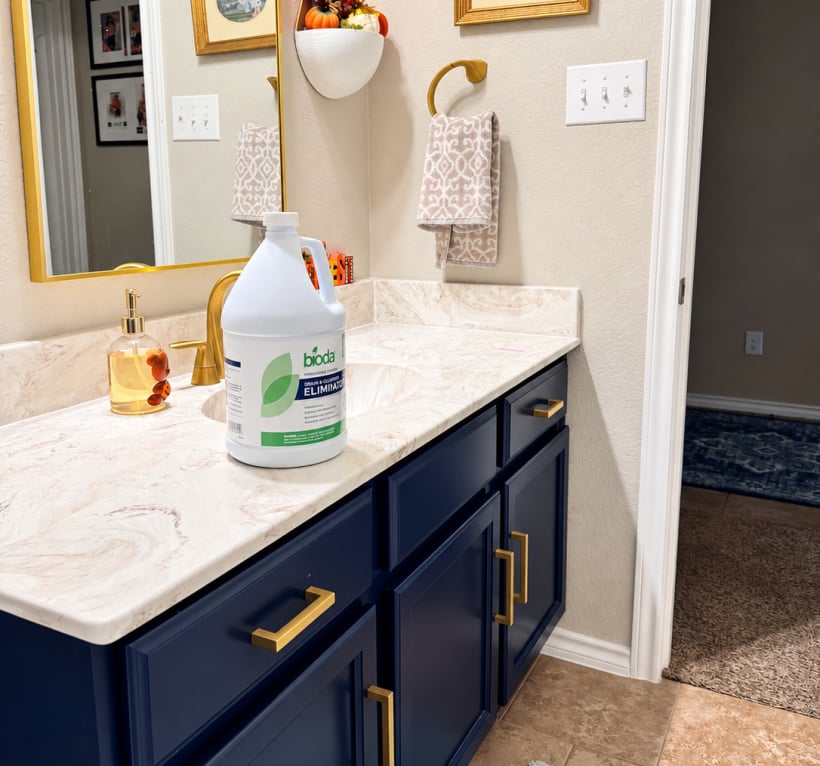
The product I use is Bioda Professional Strength Drain Cleaner & Odor Eliminator. Over the last few years, I have tried a couple of options, but found this Bioda brand to work the best so far. You can find the Bioda Bioenzyme Drain Cleaner on Amazon.
This product is designed to help break down organic buildup, control unpleasant odors, and maintain better drainage over time. And it doesn’t rely on just one cleaning ingredient. It combines beneficial microorganisms with other ingredients that help loosen and disperse organic residue.
As a chemist, I always like to understand exactly what makes a cleaning product work, so let’s look at the different ingredients and their purposes.
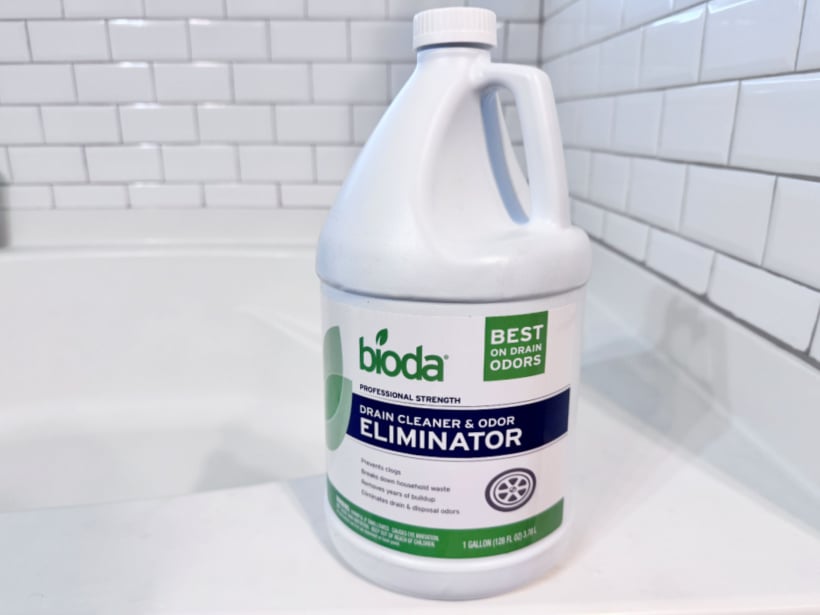
Beneficial Bacteria: The Biological Cleaning Component
These beneficial microorganisms are selected for their ability to help break down biodegradable organic material. Certain bacteria produce enzymes that help digest fats, proteins, and other organic substances. Over time, this biological activity can help reduce the buildup that contributes to odors and slow drainage.
One thing I love about this chemistry is that bacteria aren’t always something we need to eliminate. In the right application, microorganisms can be incredibly useful cleaning tools! This is why we classify them as beneficial bacteria.
Surfactants: Helping Remove Grease and Grime
Bioda’s published ingredient disclosure also identifies surfactants, including sodium dodecylbenzenesulfonate and ethoxylated alcohols.
Surfactants help water interact with oily residues and other soils.
They can loosen and disperse certain materials, making them easier to remove. This is an important distinction because Bioda isn’t simply a bottle of bacteria. It is a formulated cleaning product that combines biological activity with conventional cleaning chemistry.
Sodium Nitrate: Supporting Odor Control
Another ingredient identified in the formula list is sodium nitrate. Nitrate can influence certain microbial processes associated with unpleasant odors, including some sulfur-related odors.
This doesn’t mean it eliminates every type of drain smell, but it is one of the ingredients that helps explain the product’s odor-control design.I have found this to be one of the best benefits of this bioenzyme drain cleaner. Sometimes your drain is functioning fine, but has an unpleasant odor.
Chelating Agents: Supporting the Formula
The ingredient disclosure also includes tetrasodium EDTA. This is a chelating agent, meaning it can bind certain metal ions, including calcium and magnesium. Chelating agents can help improve the performance of cleaning formulations by managing mineral interference.
Other Ingredients
The disclosed formula also contains ingredients used for preservation.These support the product’s stability and overall formulation but are separate from the beneficial bacteria responsible for biological cleaning.
Bioenzyme Drain Cleaner vs. Traditional Drain Cleaners Like Drano
Now for the question many readers probably have and one I get all the time: Why would I choose a bioenzyme cleaner instead of a traditional drain cleaner?
The biggest difference is how the products work.
Traditional drain cleaners, such as Drano brand, commonly use ingredients like sodium hydroxide and sodium hypochlorite to chemically attack certain materials found in clogs. These products are designed to work relatively quickly when used on suitable blockages. But my plumber pointed out this traditional drain cleaners aren’t the best for breaking down organic matter and can make your drain situation worse with repeated use.
Instead of relying primarily on rapid chemical reactions, bioenzyme drain cleaners use microorganisms to help break down biodegradable organic material over time.
Here is a simple comparison table I put together:
| What it does | Bioenzyme Drain Cleaner | Traditional Drain Cleaners |
| Cleaning method | Biological activity and surfactants | Alkaline and oxidizing chemistry |
| Primary purpose | Routine maintenance and odor control | Clearing existing clogs |
| Working time | Gradual, sometimes requiring repeated treatments | Often 15–30 minutes |
| Organic buildup | Helps digest certain biodegradable residues | Chemically breaks down susceptible clog materials |
| Safety | Still requires precautions | Corrosive and requires strict precautions |
| Best use | Maintenance, odor and organic buildup. Good for long term use | Suitable clogs needing faster removal and short term use |
One reason I like biological drain cleaners is that they can help address organic material before it becomes a larger plumbing problem. They are great for maintenance and long-term use.
Traditional drain cleaners can also break down buildup, just through different chemical mechanisms and acids. However, bioenzyme products are especially interesting for routine maintenance because they can help manage biodegradable residue over time.
If you have an accumulation of organic residue contributing to odors or minor slow drainage, a biological cleaner may be worth considering.
If you have a severe clog, foreign object, large hair obstruction, or plumbing damage, a biological cleaner may not solve the problem. It is really important in those drastic situations to call a plumber!
How to Use Bioenzyme Drain Cleaner
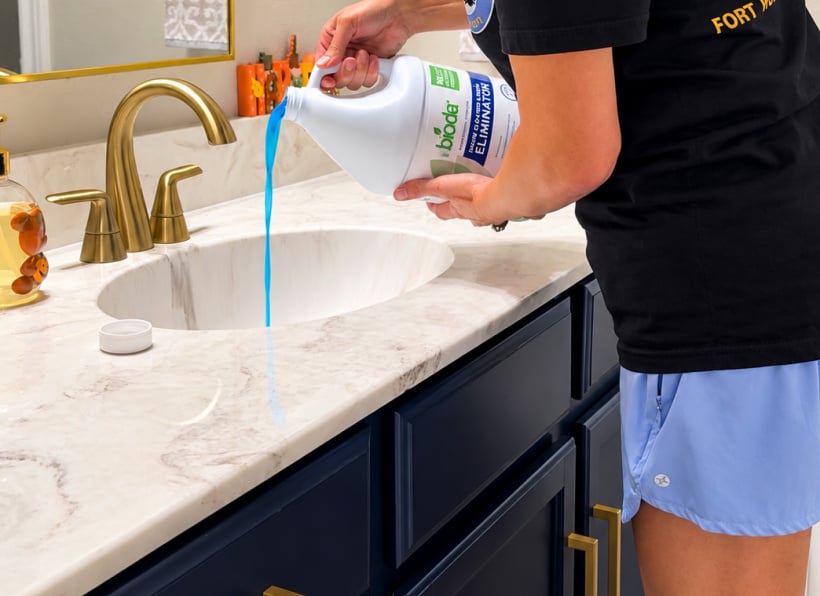
One of the easiest ways to incorporate a biological cleaner into your routine is to apply it when the drain won’t be used for several hours. The directions recommend doing it at night or allowing it to sit for 8 hours.
Here are a few tips:
- Read the directions on your specific product bottle.
- Measure the recommended amount for the type of drain and problem you are treating.
- Apply the cleaner when you won’t need to use the drain for about 8 hours.
- Repeat treatments as recommended or if you have really bad drain odor.
Why Water Temperature Matters
Here is another interesting part of the science! Microorganisms and enzymes are sensitive to environmental conditions, including temperature. Extremely hot water can damage or inactivate biological components, potentially reducing the effectiveness of the cleaner. The bottle even mentions not to use boiling water. In fact, no need to really rinse this particular drain cleaner.
For this reason, avoid pouring boiling water, bleach, or other cleaning chemicals into the drain during treatment unless the manufacturer specifically instructs you to do so.
Important Cautions Before Using Bioenzyme Drain Cleaners
Although bioenzyme drain cleaners work differently from traditional products, they are still formulated cleaning solutions and need to be handled carefully. Always pay attention to what the bottle says.
Here are a few important precautions:
- Never mix drain cleaners. Do not combine bioenzyme cleaners with Drano, bleach, acids, or other drain cleaning products.
- Protect your eyes and skin. Avoid splashing, wear appropriate eye protection, and wash your hands after use.
- Keep away from children and pets. Store the product securely in its original container.
- Avoid boiling water during treatment. High temperatures can interfere with the biological cleaning process.
- Don’t use it as a substitute for plumbing repairs. Severe blockages, damaged pipes, and recurring drainage issues may require professional attention.
Also, if your drains smell like sewer gas, multiple fixtures are draining slowly, or wastewater is backing up, contact a plumber instead of assuming the problem is ordinary organic buildup.
As a chemist, I always remind readers that even products made with beneficial microorganisms can contain other ingredients that require careful handling.
Final Thoughts: A Simple Chemistry Hack for Your Drains
One of my favorite things about chemistry is that the best cleaning solutions aren’t always about using the strongest ingredients. Sometimes, the key is understanding what is causing a problem and choosing a product with the right mechanism to address it.
Bioenzyme drain cleaners are a great example! By combining beneficial bacteria with other cleaning ingredients, these products can help manage organic buildup and unpleasant odors over time.
If you have been dealing with unpleasant drain odors or want to learn more about maintaining your drains, this is one chemistry hack worth exploring. Find the Bioda Bioenzyme Drain Cleaner I Use on Amazon

About the Author
I’m the chemist and mom behind Chemistry Cachet, where I share science-backed cleaning tips, skincare advice, and practical home hacks that make everyday life a little easier.
My goal is to help you understand the chemistry behind the products and routines you use so you can save time and money using products that actually work.
Follow along on Instagram for more simple chemistry hacks and cleaning tips!

Chemistry Hacks For Home and Outdoors
Quick hacks to save time, money, and eliminate unnecessary chemicals!
An easy to use eBook full of over 30+ DIY solutions for cleaning inside and out!