
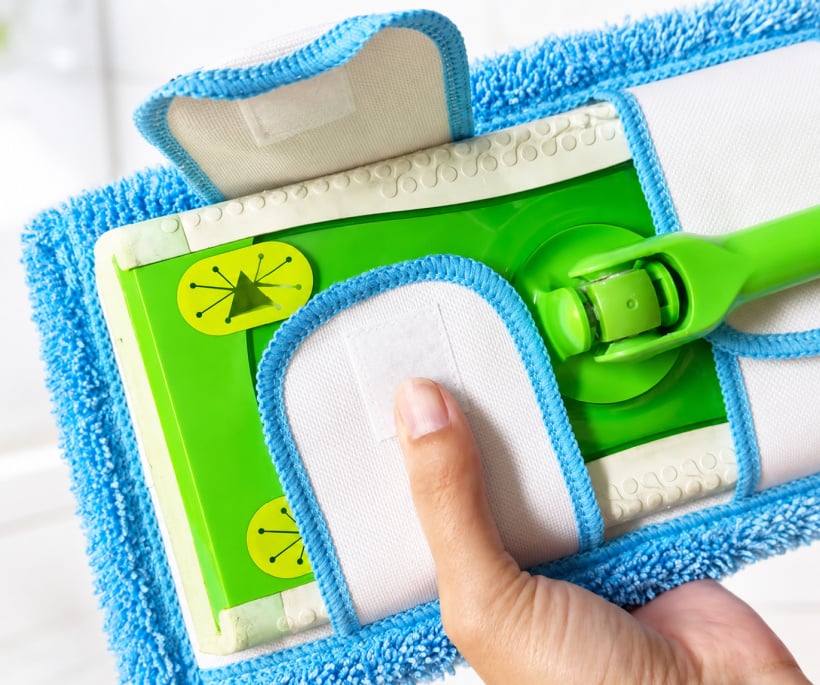
If you’ve spent any time on TikTok, Instagram, or Pinterest lately, you’ve probably seen people adding all kinds of ingredients to their mop water.
Vinegar. Dish soap. Essential oils. Baking soda. Rubbing alcohol. Sometimes all of the above!
But do you really need that many ingredients to get your floors clean?
As a chemist, I’m a big believer in using fewer ingredients when they can get the job done just as well or better. For everyday floor cleaning, my favorite DIY mop water is incredibly simple: water, Dawn dish soap, and rubbing alcohol.
It cleans, cuts through everyday grime, dries quickly, and doesn’t require a complicated cocktail of cleaning ingredients.
My Simple DIY Mop Water Recipe
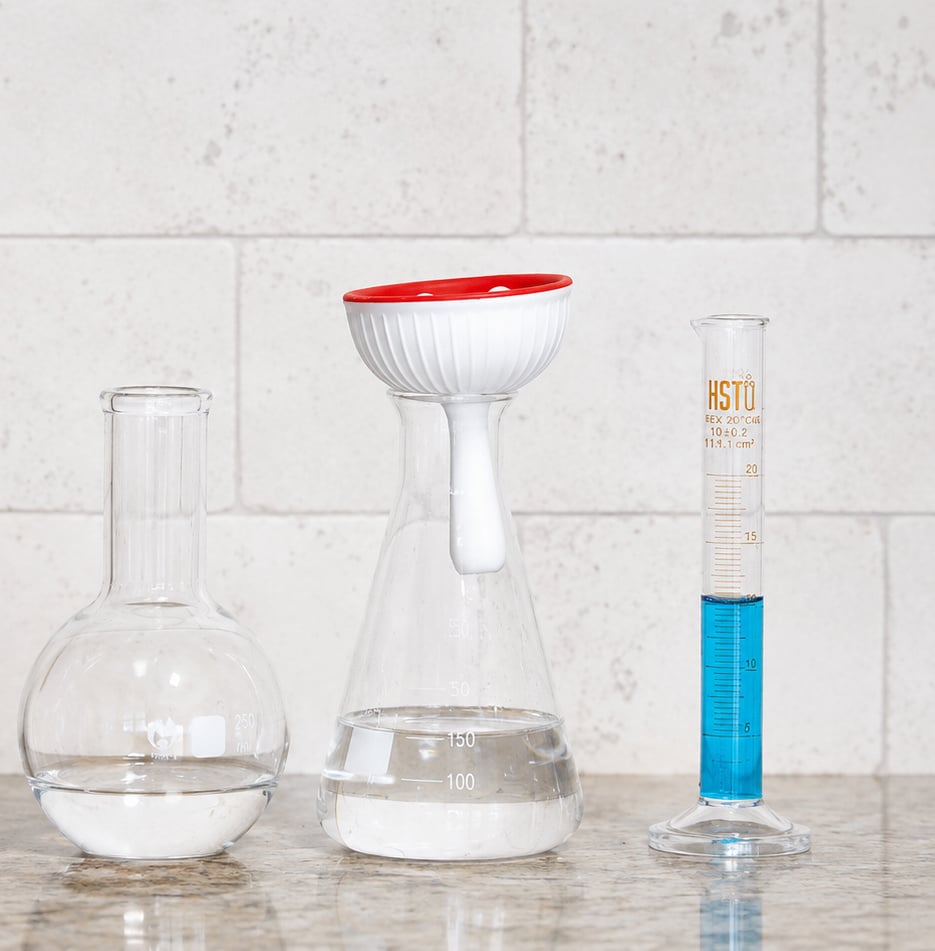
Here’s the combination I use for routine floor cleaning. Find all the items needed in our list here. and watch the video for this recipe here!
You’ll need:
- 1 gallon Warm Water
- 1 teaspoon Dawn Dish Soap
- ½ cup Rubbing Alcohol (70% is good)
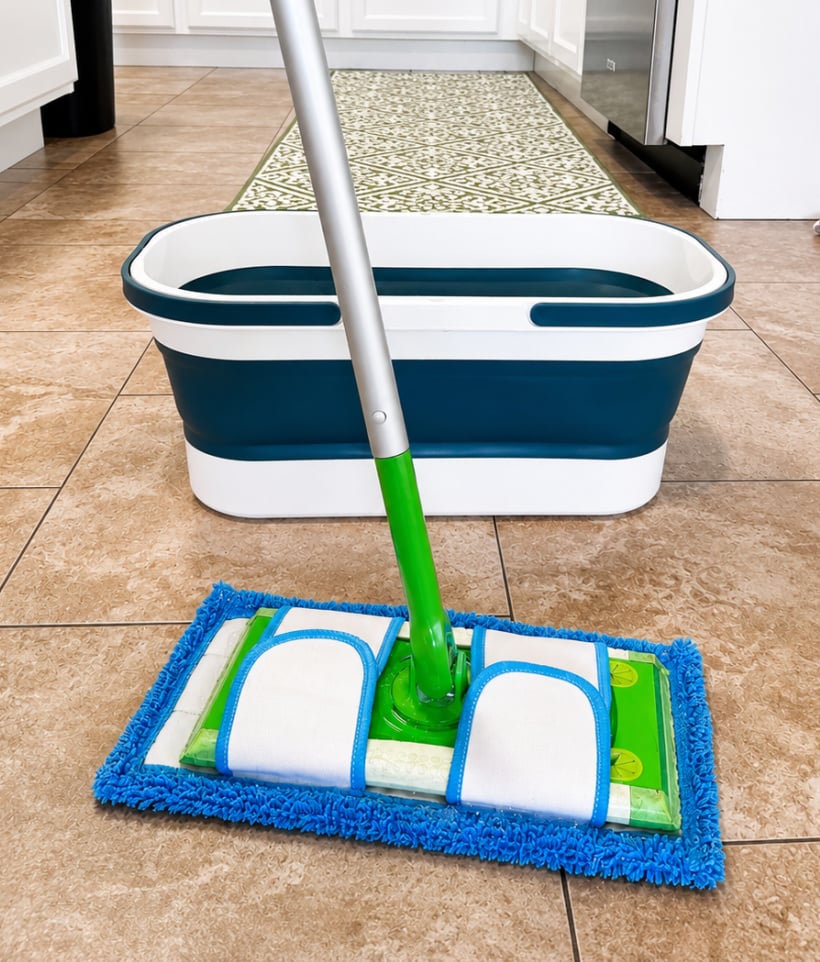
- Reusable Mop Heads For Swiffer Mops
- Mushroom Funnel (optional, but a huge reader favorite 🙂 )
- Collapsible Mop Bucket
Directions:
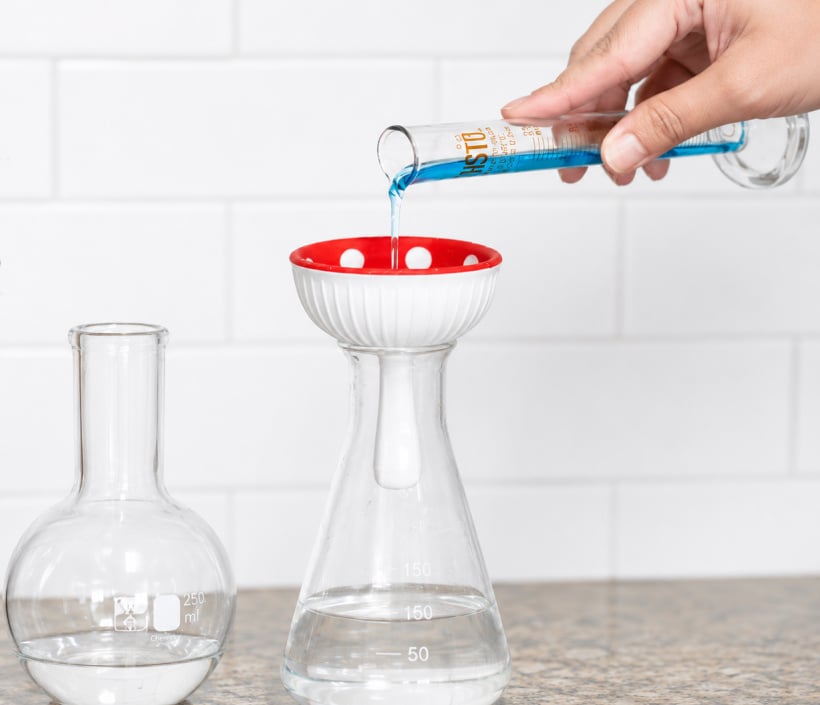
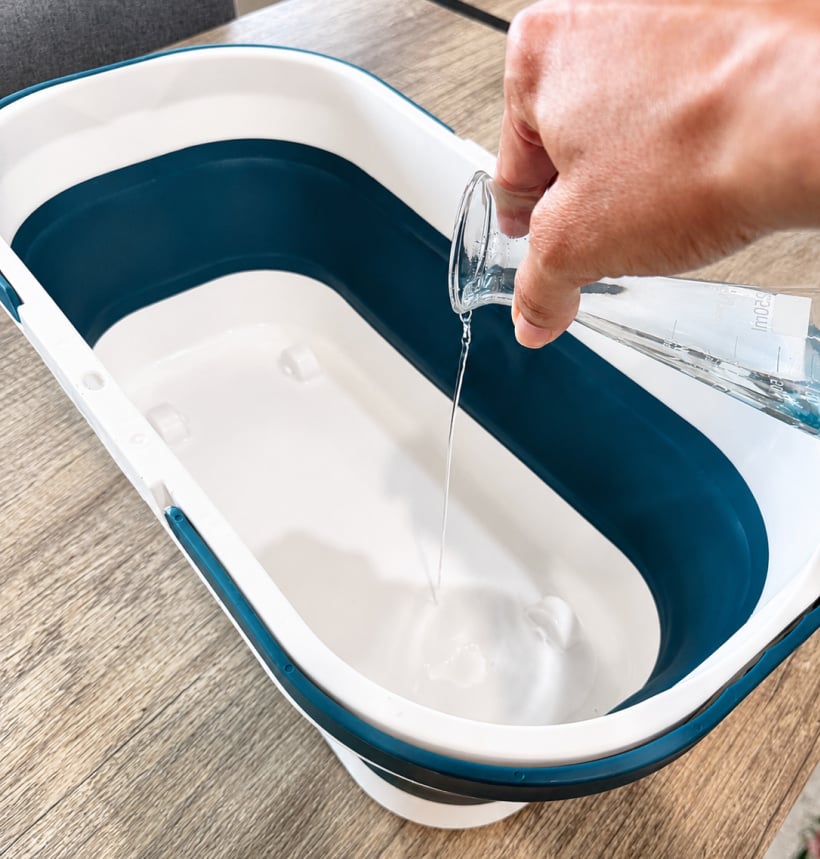
- Add everything to your mop bucket and gently mix.
- You don’t want to create a bucket full of bubbles, so add the Dawn slowly, you can also gently mix the alcohol and dawn together like I show in the pictures, then add that solution to the mop bucket. Gently top with water.
- Mop as usual.
👩🏻🔬 Chemist Tip: More dish soap does NOT mean cleaner floors! Using too much surfactant can leave behind a film, which can make floors look dull or even cause them to attract dirt faster.
Why I Skip the Vinegar in Viral Mop Water
One of the most common viral DIY mop-water recipes combines vinegar + Dawn + water, and some versions add rubbing alcohol, essential oils, or baking soda too.
Here’s the thing: vinegar certainly has a place in cleaning. I use it for plenty of specific cleaning jobs.
But that doesn’t mean it needs to go into every DIY cleaner.
Vinegar contains acetic acid, which makes it particularly useful when you’re trying to dissolve mineral buildup and hard-water deposits.
Most of the dirt on your floors isn’t mineral buildup.
You’re generally dealing with dust, tracked-in dirt, food residue, oils, pet messes, and everyday grime. For those jobs, I would rather focus on surfactant action than add an acid that isn’t necessary.
There’s another benefit to leaving it out: vinegar isn’t appropriate for every flooring material. Acidic cleaners can damage natural stone and may not be recommended for certain floor finishes.
Sometimes the simplest formula really is the best one.
Why Dawn Works So Well
The real cleaning workhorse in this DIY mop water is the dish soap.
Dawn Dish Soap contains surfactants, which are molecules that help water interact with oils and grime.
One end of a surfactant molecule is attracted to water, while the other interacts more readily with oily substances. This allows oily grime to be loosened from the surface and suspended in your cleaning water so your mop can pick it up. This is exactly why you don’t need very much. You can use your favorite dish soap, but just keep in mind this recipe was most successful with the Dawn formula.
About a teaspoon in a gallon of water is plenty for routine cleaning.
Adding a big squeeze of Dawn might look satisfying on a cleaning Reel, but you’re creating more product that ultimately needs to come back OFF the floor.
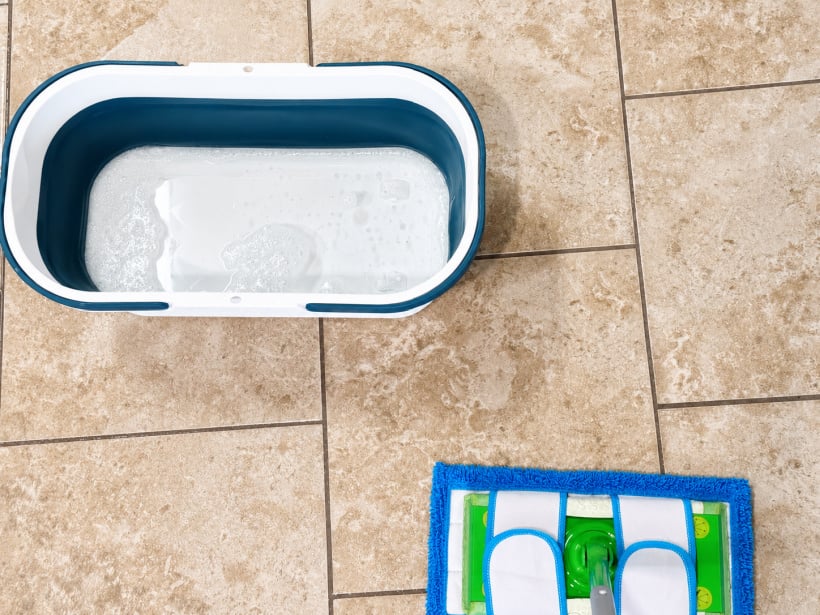
If you’ve ever mopped and wondered why your floors felt slightly sticky afterward, too much cleaning product may have been the culprit. A small amount of dish soap is perfect like in the picture below, a few gentle suds.
Why I Add Rubbing Alcohol
This is my favorite addition to the mixture.
Rubbing Alcohol acts as a solvent and can help tackle certain greasy and sticky residues that water alone doesn’t handle particularly well. It also evaporates much more readily than water.
That can help your mop solution dry faster and is one reason I like alcohol in simple DIY cleaning sprays and solutions including our DIY countertop cleaner.
So instead of adding four or five different cleaning ingredients, we’re giving each ingredient a specific job:
- Water = carrier and rinsing medium
- Dawn = surfactants that loosen oily dirt and grime
- Rubbing alcohol = solvent that helps with residue and promotes faster drying
Why I Don’t Add Baking Soda
Another ingredient you’ll sometimes see tossed into viral mop water is baking soda. I would skip it for everyday floor cleaning.
Baking soda can be useful in certain cleaning situations, but adding powder to a bucket of mop water isn’t necessarily improving its ability to clean everyday grime. If it isn’t adequately dissolved or too much is used, you may also end up dealing with residue.
And please don’t add baking soda simply because your mop water already contains vinegar.
That dramatic fizz you see when vinegar and baking soda meet is an acid-base reaction. It looks impressive on camera, but you’re actually reacting the two ingredients with one another.
This is one of my biggest rules as a chemist when it comes to DIY cleaners: every ingredient should have a purpose.
What About Essential Oils?
You don’t need them for cleaning floors. Essential oils may make your mop water smell nice, but fragrance isn’t the same thing as cleaning power.
If you love the scent and your flooring manufacturer allows it, that’s a personal preference. You can certainly add a little, but it isn’t necessary.
Is This DIY Mop Water Safe for Every Floor?
No, and this is important to remember. There really isn’t one homemade floor cleaner that’s appropriate for every flooring material.
I primarily recommend this recipe for appropriate sealed, water-safe flooring, but always check the manufacturer’s cleaning instructions for your particular floors first.
Natural stone, unsealed surfaces, waxed floors, specialty finishes, and certain hardwood or laminate products may require specific cleaners or very limited moisture.
Also remember that rubbing alcohol is a solvent. That quality is helpful for cleaning, but it also means it may affect certain coatings or finishes. With that being said, this only contains a SMALL amount for one gallon of water making it usually safe.
When in doubt, test a small hidden area first. This is a good rule of thumb for both homemade and store-bought cleaners.
Why This Is Better Than Complicated Viral Mop Water
I love testing viral cleaning hacks because occasionally there is some great chemistry hiding behind them. But more ingredients don’t automatically equal more cleaning power.
For routine floor cleaning, I want three things:
Something to loosen grime. Something to help with greasy residue. And water to carry everything away.
Dawn + rubbing alcohol + water accomplishes exactly that without throwing unnecessary ingredients into the bucket.
It’s inexpensive, takes seconds to mix, and uses ingredients many of us already have at home.
And perhaps most importantly, every ingredient has an actual reason for being there. That’s the difference between throwing together a viral DIY cleaning concoction and creating a simple cleaning formula based on chemistry.
More Popular Cleaning Tips From Chemistry Cachet
If you enjoyed this simple DIY mop water, be sure to check out some of Chemistry Cachet’s other popular cleaning tips!

About Alexis
Hi, I’m Alexis! I’m an investigative chemist, mom, and founder of Chemistry Cachet, where I’ve been sharing simple science-backed tips for a cleaner home, healthier skin, and easier everyday living since 2015.
I have a degree in Professional Chemistry and Mathematics, and one of my favorite things to do is test popular cleaning hacks, DIY recipes, and household products to find out what actually works plus what you can skip. I believe cleaning doesn’t have to be complicated or require a cabinet full of products. A little chemistry can make a big difference!
Want more simple chemist tips? Follow along with Chemistry Cachet on Facebook and on Instagram for cleaning hacks, skincare science, mom life, and new things I’m testing.

Chemistry Hacks For Home and Outdoors
Quick hacks to save time, money, and eliminate unnecessary chemicals!
An easy to use eBook full of over 30+ DIY solutions for cleaning inside and out!















Is it safe to use on microcement floors?
I read some info on microcement floors, it says you can use a water based cleaner and soap. It warned against using anything like vinegar or bleach, so this recipe should be the perfect cleaner! I would just test a small area first to be sure
I don’t need a whole gallon at once so if I mix this up will it save for some time in a gallon jug with a lid?
Yes it will, it is a similar formula to our DIY all-purpose spray that you store in a bottle, so it should be fine!
I love your tips and the science behind them! Can’t believe how your kids are growing up so quickly; both looking happy and healthy.
Congratulations
Julie
Aw thanks so much Julie! They have grown so fast especially over this summer.
Thanks for being a reader!