
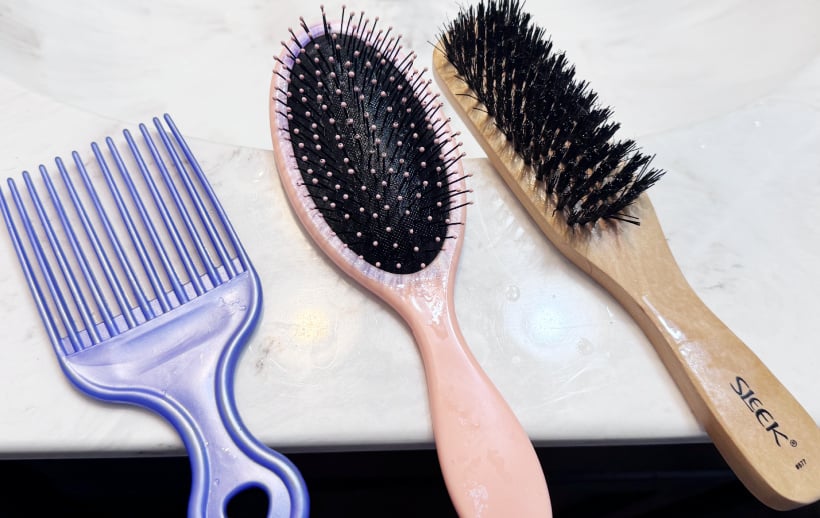
Wondering how to clean hairbrushes and remove the oily buildup around the bristles? This easy DIY hairbrush cleaning hack uses shampoo, warm water, and an optional hydrogen peroxide spray to remove hair oils, styling-product residue, dust, and grime.
I’ve used this simple hairbrush-cleaning method for about 15 years! If you’ve followed Chemistry Cachet for a while, you have probably heard me share this tip and may have already tried it yourself.
It was finally time to give this tried-and-true cleaning hack its own blog post with detailed instructions and the simple chemistry behind why it works.
What You Need to Clean a Hairbrush
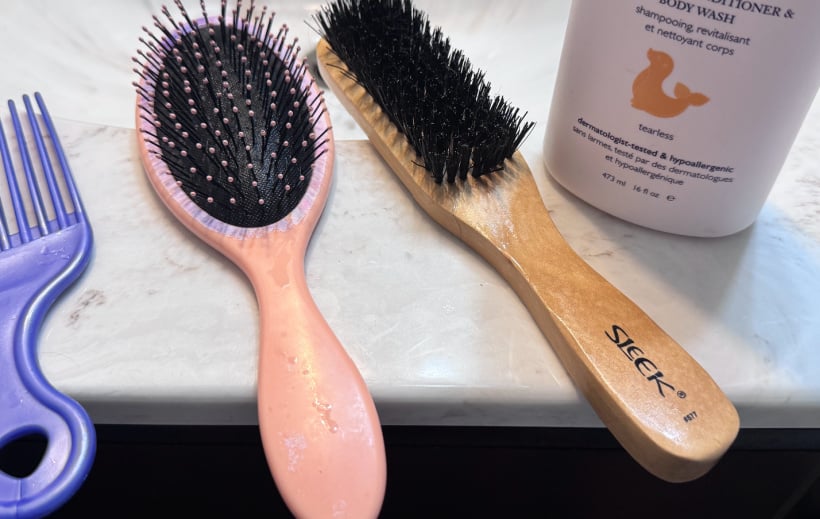
You only need a few basic supplies for this DIY hairbrush cleaner:
- 2 tablespoons of shampoo (baby shampoo is one of my favorite options)
- A sink or large bowl filled with warm water
- A comb or small pair of scissors
- hydrogen peroxide, optional
- A clean towel
Baby shampoo is one of my favorite choices for this method because it is typically formulated to cleanse gently. This can make it a good option for more delicate brushes.
How to Clean Hairbrushes With Shampoo
Step 1: Remove the Trapped Hair
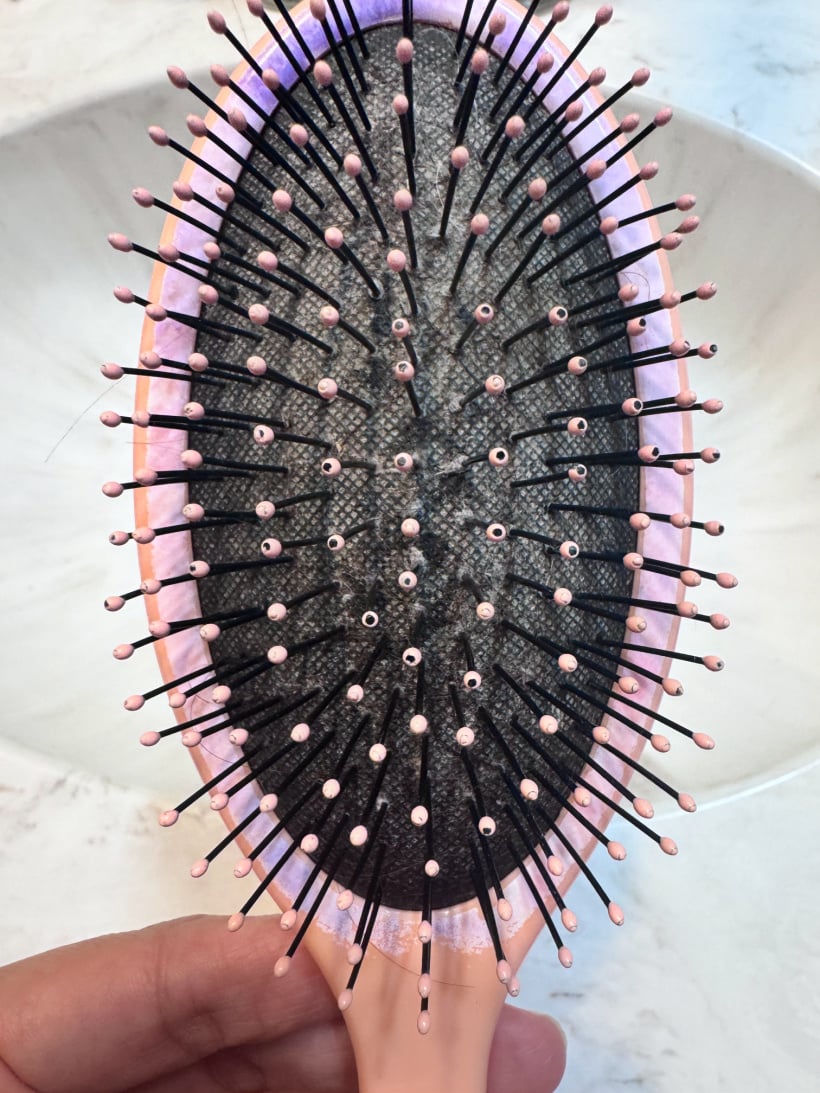
Before soaking your brushes, pull out as much trapped hair as possible. Use a comb or small pair of scissors to loosen hair that is wrapped tightly around the bristles.
Be careful not to cut or damage the bristles, but try to remove as much hair as possible.
Step 2: Prepare the Shampoo Solution
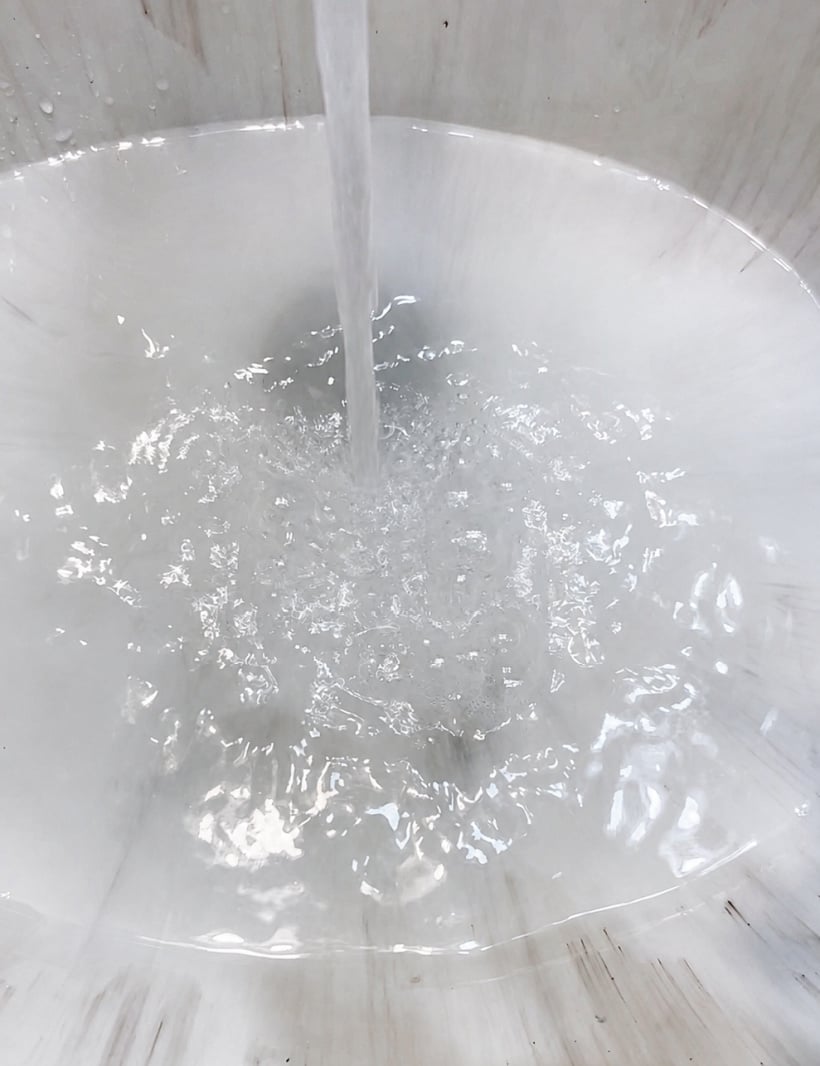
Fill your sink or a large bowl with warm water. Add approximately 2 tablespoons of shampoo and gently mix it into the water.
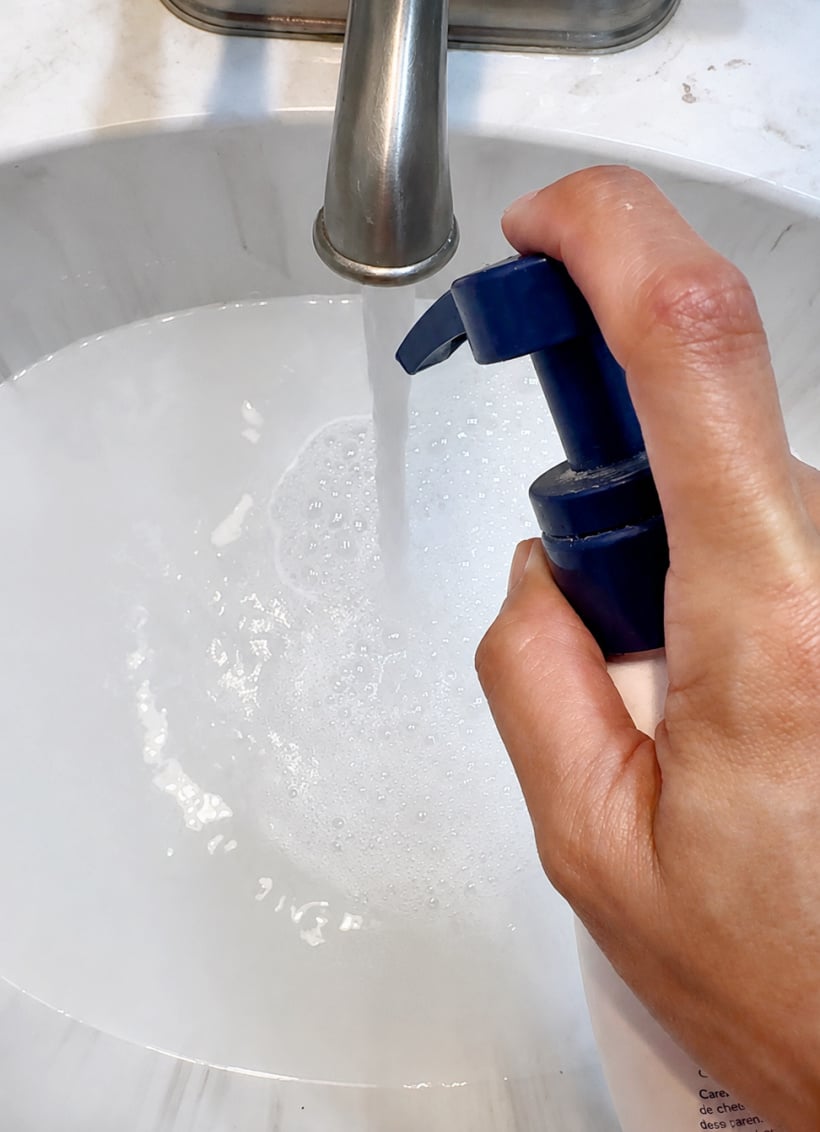
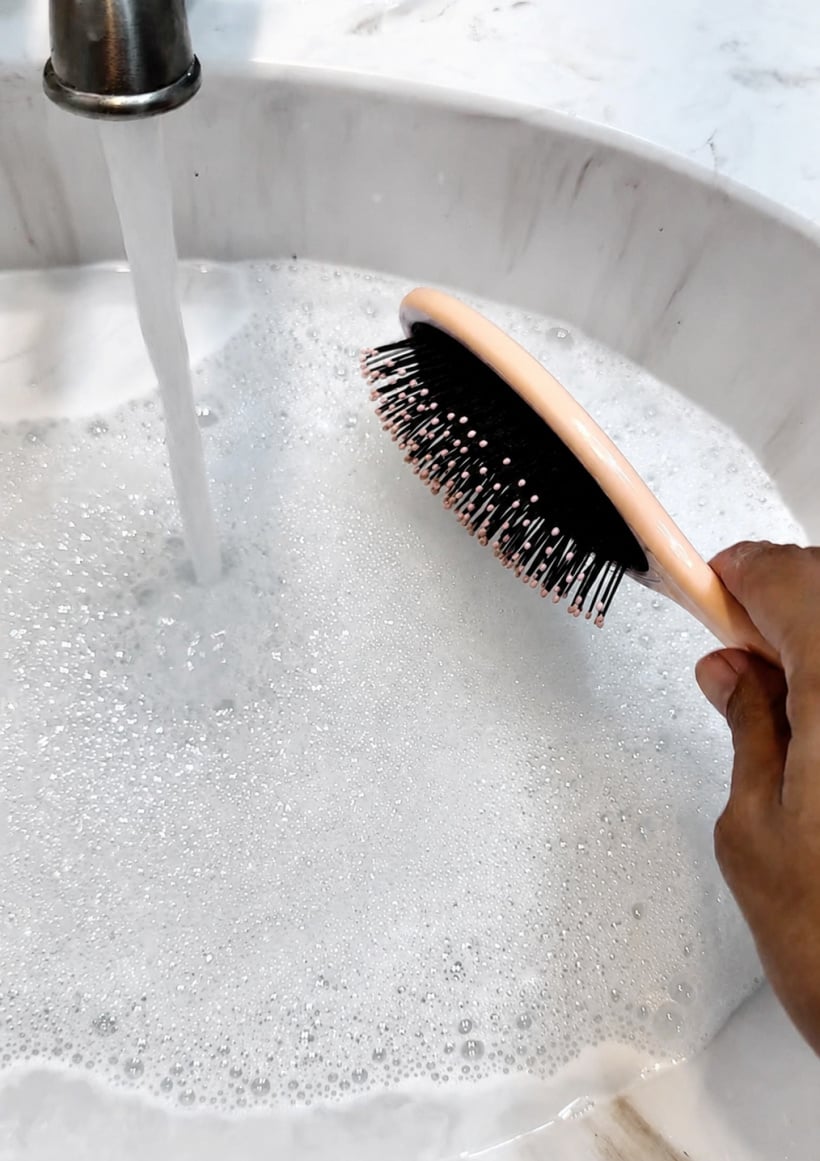
Step 3: Soak the Hairbrushes
Place compatible hairbrushes into the shampoo solution and let them soak for 20–30 minutes.
The warm, soapy water will begin loosening the oils and product buildup around the bristles and base of the brush.
Step 4: Scrub and Rinse
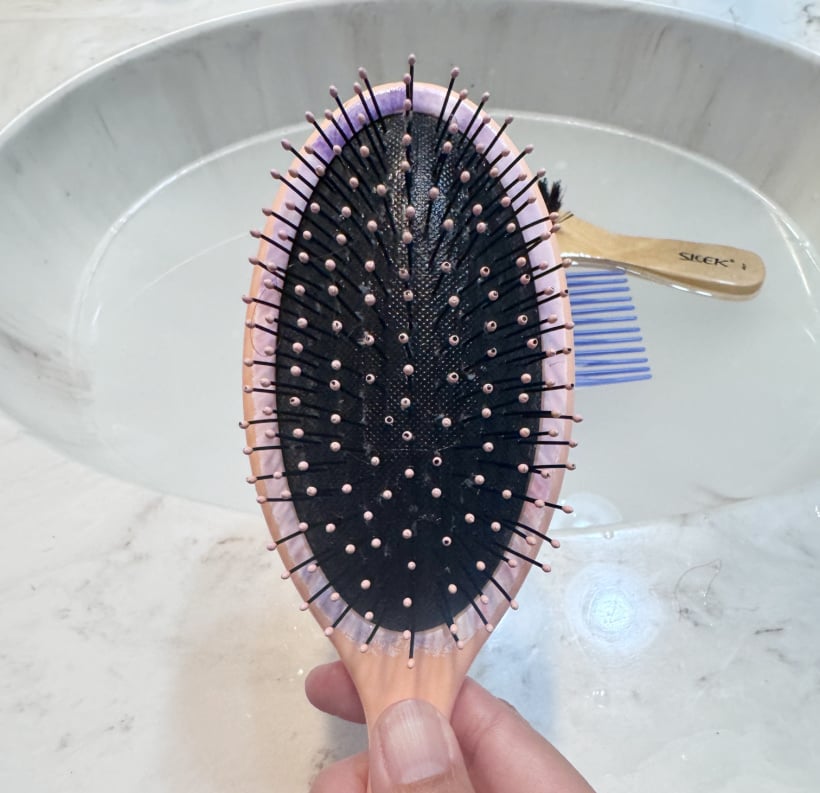
After soaking, gently scrub away any residue that remains. Rinse the brushes thoroughly with clean water.
Step 5: Let the Brushes Air-Dry
Place the clean brushes bristle-side down on a towel. Allow them to air-dry completely before using them again.
Why You Should Clean Your Hairbrush Regularly
Hairbrushes collect much more than loose strands of hair. Over time, your brush can accumulate:
- Natural oils from your hair and scalp
- Styling-product residue
- Dead skin
- Dust and lint
- Dry shampoo buildup
- Dirt transferred from your hair
When you use a dirty hairbrush, some of that old residue can transfer back onto your clean hair. Regularly deep-cleaning your brushes helps remove buildup and keeps them looking and feeling fresh.
Why Shampoo Cleans Hairbrushes So Well
Here’s the quick chemistry behind this hairbrush cleaning hack: Shampoo contains cleansing ingredients called surfactants.
Surfactant molecules help loosen and lift oils, styling-product residue, and grime so the buildup can mix with water and rinse away. Since shampoo is already formulated to remove oil and residue from your hair, it can also work well on the same type of buildup left behind on your hairbrush. This is why it works better than other types of soap or cleaning products.
It’s a simple example of using the right chemistry for the job!
Can You Use Baby Shampoo to Clean Hairbrushes?
Baby shampoo is a great choice for cleaning many hairbrushes because it is typically formulated to cleanse gently. It can be a good starting option for common plastic and synthetic brush materials when you don’t want to use an overly harsh cleaner. If you have extra baby shampoo, you can definitely use it! Check out these other baby shampoo uses for around the home.
However, always check the manufacturer’s cleaning instructions before soaking an expensive or specialty hairbrush.
Optional Hydrogen Peroxide Step
After washing, you can spray compatible plastic or synthetic brushes with hydrogen peroxide. Allow the surface to remain wet for approximately 10 minutes, or follow the contact time listed on your product label. Rinse the brush thoroughly afterward.
Always test hydrogen peroxide on a small, inconspicuous area first because it may discolor or damage certain materials.
What Types of Hairbrushes Should Not Be Soaked?
Do not fully submerge every type of hairbrush. Avoid soaking:
- Real wooden hairbrushes
- Natural-boar-bristle brushes
- Padded or cushioned brushes
- Brushes with glued components
- Electronic or heated brushes
For these brushes, place only the bristles in the shampoo solution or use a damp cloth and a small amount of diluted shampoo to clean them carefully. Try to keep wooden, padded, glued, and electronic portions dry.
In the photo, I did pop my daughter’s wooden brush (not real wood) into the solution for less time because I have had success with it. But if this is your first time trying this method, use caution on those types of brushes.
How Often Should You Clean Your Hairbrush?
Remove trapped hair from your brush regularly and deep-clean it whenever you notice visible oil, lint, or product residue. If you use dry shampoo, hairspray, oils, or other styling products frequently, your brushes may need to be cleaned more often. I clean my daughter’s brushes every few months.
This is one of my oldest Chemistry Cachet cleaning hacks, and there is a reason I’ve continued using it for 15 years: it’s inexpensive, easy, and backed by basic cleaning chemistry!

Chemistry Hacks For Home and Outdoors
Quick hacks to save time, money, and eliminate unnecessary chemicals!
An easy to use eBook full of over 30+ DIY solutions for cleaning inside and out!

















A sharp seam ripper works well to remove the hair would around the base of the bristles on plastic brushes. It’s allows you to pull the hair away from the bristles easier than you can do with small scissors like embroidery scissors. At least it works well for me.
Yes anything small works!
I use needle nose pliers or tweezers to pull out hair. (It’s a little easier to pull off hair and fuzz that’s wrapped around those round tips on some brushes)Can also purchase a 4 pk hair brush cleaner from amazon.Or look in the dollar store.