Eco-cleaning is everywhere right now ! From TikTok routines, Pinterest boards, and perfectly aesthetic refill stations. But as a chemist, I can tell you eco-friendly doesn’t automatically mean effective, safe, or even non-toxic.
In 2026, the smartest cleaning swaps aren’t about fear-based marketing or viral hacks. They’re about chemistry that works with fewer unnecessary hazards.
Let’s break down the biggest eco-cleaning trends, and which ones are actually worth making. I have been watching these trends over the last year, and these are the ones you are seeing online right now.
1. Adding in Enzyme Cleaners
Enzyme cleaners have exploded in popularity, especially for kitchens, bathrooms, and pet messes.
🧪The chemistry: Enzymes are biological catalysts. They break down proteins, fats, and carbohydrates into smaller, removable pieces. That’s why they’re incredibly effective for pet urine, food spills, and grease and organic odors.
What People Misunderstand About Enzyme Cleaners:
Enzymes don’t actually kill germs, they remove the mess that germs feed on. This makes enzyme cleaners great for removing the organic mess more effectively than just trying to disinfect.
Smart Swap
Swap out harsh cleaners, and keep a simple enzyme cleaner on hand for routine organic messes. Also, try an enzyme laundry detergent booster.
2. Plant-Based Surfactants
More brands are swapping petroleum-based surfactants for plant-derived options, and this is one eco trend that does make sense.
🧪 The chemistry: Surfactants (like dish soap) work by lowering surface tension and lifting dirt so it can be rinsed away. Plant-based surfactants can do this just as effectively and often with better biodegradability and lower skin irritation potential.
What People Misunderstand With Marketing Myths:
More suds = better cleaning. In reality, more suds don’t always mean better cleaning. You can still get the same results without necessarily seeing more suds!
Smart Swaps
Try swapping to a plant-based surfactant for your dishes! I have had great luck substituting this brand for regular dish soap. While it is plant-based, you get similar cleaning results to traditional surfactants. I have shared it many times in our homemade cleaners.
3. Refillable Concentrates
Refillable concentrates are trending hard on Pinterest. Less plastic, less shipping weight, less waste! Along with these, DIY cleaners are always trending. You buy ingredients and refill your spray bottles to save on plastic use.
🧪 The chemistry concern: Once water is added, stability matters. Without proper preservatives, bacteria and mold can grow. Plus, performance can degrade over time. This is where DIY often fails and why we make all of our DIY cleaners in small batches meant to be used within 1-2 weeks at the most.
Smart Swap:
You can swap regular main stream cleaners with commercial eco-friendly concentrates or use Chemistry Cachet’s proven DIY cleaners.
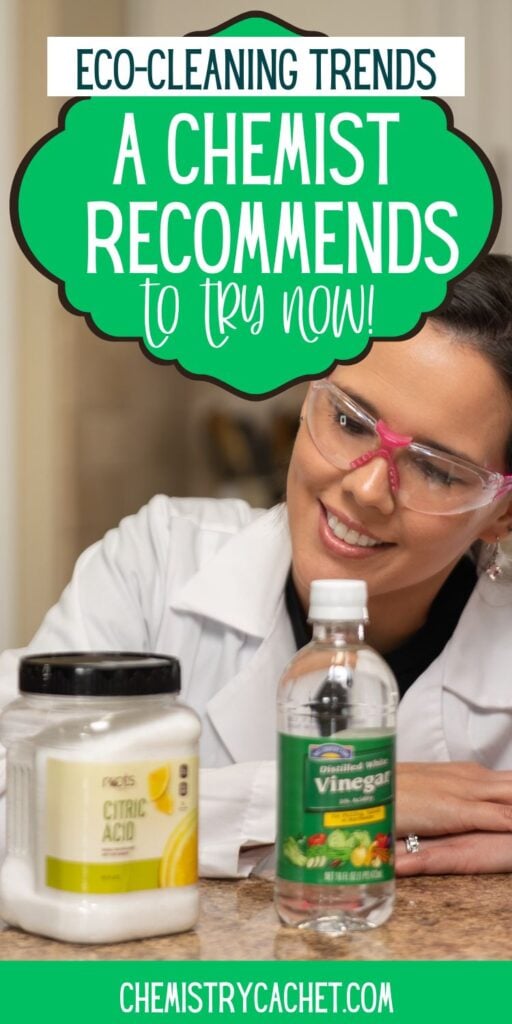
4. Vinegar Is Not the Eco-Cleaning Hero
Vinegar might be the most overused “natural cleaner” on social media. With everyone wanting to swap out toxic products for non-toxic products, they are starting to misuse even natural items. We have talked about vinegar more than any other substance on Chemistry Cachet because it is so misused.
🧪 The chemistry: Vinegar is acetic acid. While it’s good for mineral scale and soap scum, vinegar is bad for natural stone, sealed grout, and many surfaces people use on daily. It’s also not an effective disinfectant, despite what TikTok claims!
Smart Swap
Just simply use acidic cleaners for soap scum and hard water scale, and use appropriate cleaners for daily use and natural stone!
5. Fragrance-Free Cleaning
One of the most important eco shifts isn’t plant-based but fragrance reduction. This has been trending for several years, but I think in 2026 you will see this really being front and center with eco-friendly trends. There are so many options now for non-toxic fragrance and most of your favorite cleaning products are also available in a fragrance-free option.
🧪 The chemistry: fragrance doesn’t improve cleaning. It’s one of the biggest contributors to headaches, asthma irritation, and skin sensitivity. Even if something smells “good” it doesn’t mean that it is clean. The “clean smell” is often just leftover scent, not cleanliness.
Smart Swap
Switch to fragrance-free or low-VOC formulas. Use a plant-based room spray and even try fragrance-free detergents.
Final Takeaway
The best eco-cleaning trends of 2026 aren’t about avoiding “chemicals.” Everything is a chemical including water and vinegar. The real goal is using the right chemistry for the job, with fewer unnecessary risks. Be careful about following influencer trends on social media which are often more hyper than good. Stick with Chemistry Cachet for tried and true simple science based cleaning hacks.

Chemistry Hacks For Home and Outdoors
Quick hacks to save time, money, and eliminate unnecessary chemicals!
An easy to use eBook full of over 30+ DIY solutions for cleaning inside and out!