There is nothing more frustrating than pulling a freshly washed towel out of the dryer only to discover it still smells musty.
As a chemist, I can tell you that the problem is usually not that your towels are dirty. In many cases, the real culprit is buildup trapped deep within the towel fibers. Over time, body oils, detergent residue, hard water minerals, and moisture can accumulate in towels, creating the perfect environment for unpleasant odors.
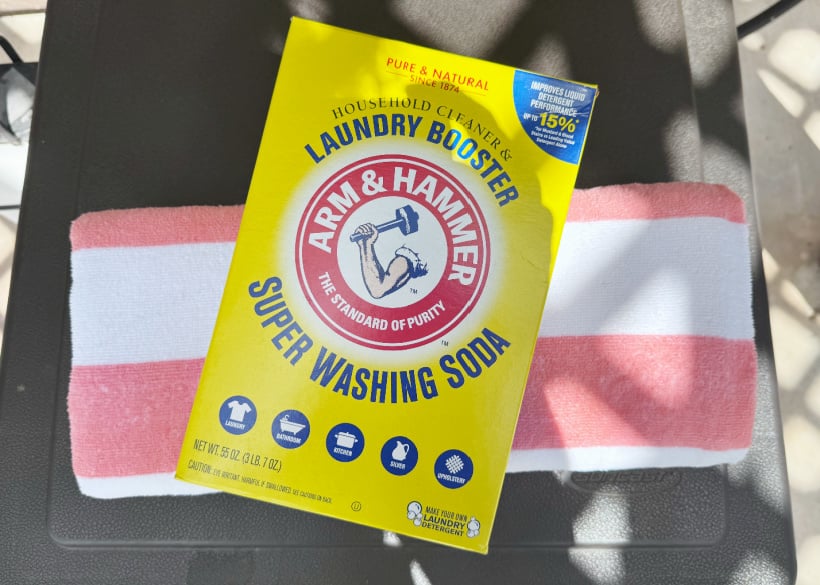
The good news is that there is a simple DIY towel soak that can help remove this buildup and restore freshness. I use washing soda for this method because it is excellent at loosening residues that regular washing sometimes leaves behind.
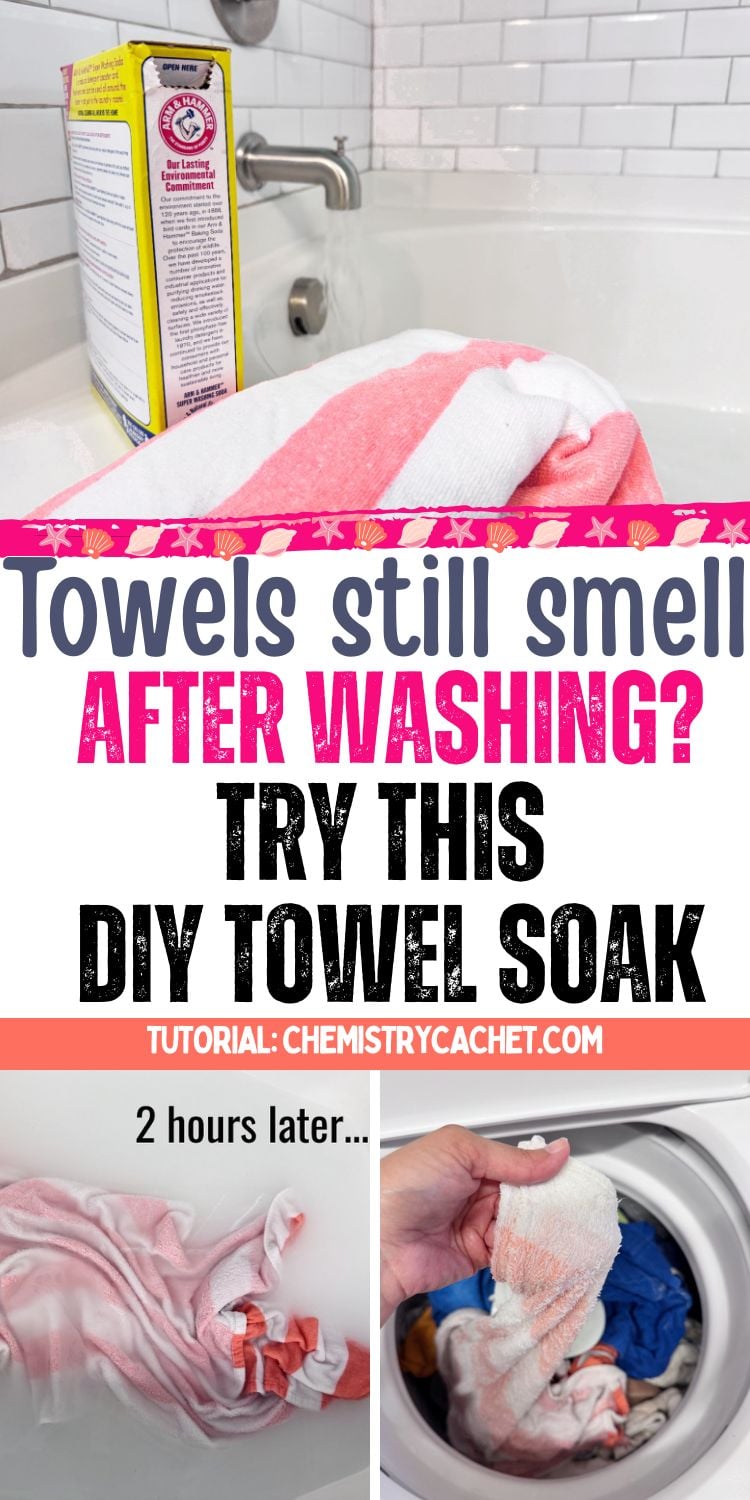
We just got back from a beach trip, and a few of our towels had a musty odor from ocean water, pool trips, and then sitting in a laundry bag on the way back. A regular wash cycle didn’t work, so I used this method. This works for beach towels, pool towels, bath towels, and even kitchen towels.
The DIY Towel Soak Refresh
This simple soak helps loosen and remove buildup before laundering.
Supplies
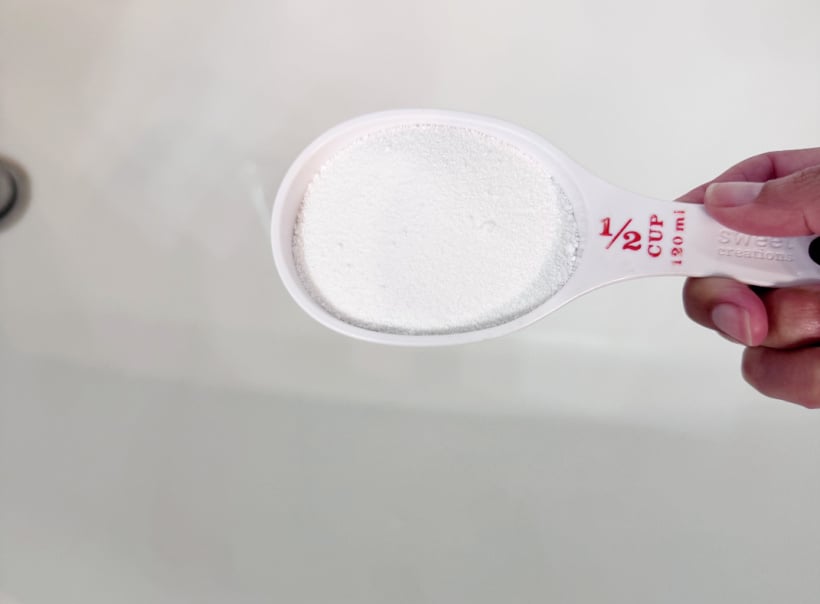
- ½ cup washing soda
- Hot water
- Bathtub, utility sink, or large bucket
- Musty towels
Instructions
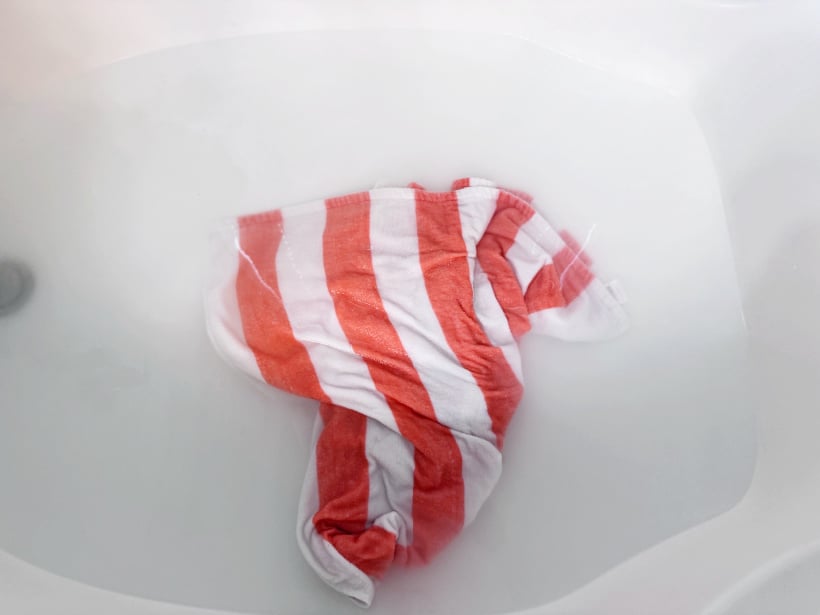
- Fill a bathtub or large container with enough hot water to fully cover the towels. Just enough to cover the towel, not more.
- Dissolve ½ cup washing soda into the water.
- Add the towels and make sure they are completely submerged.
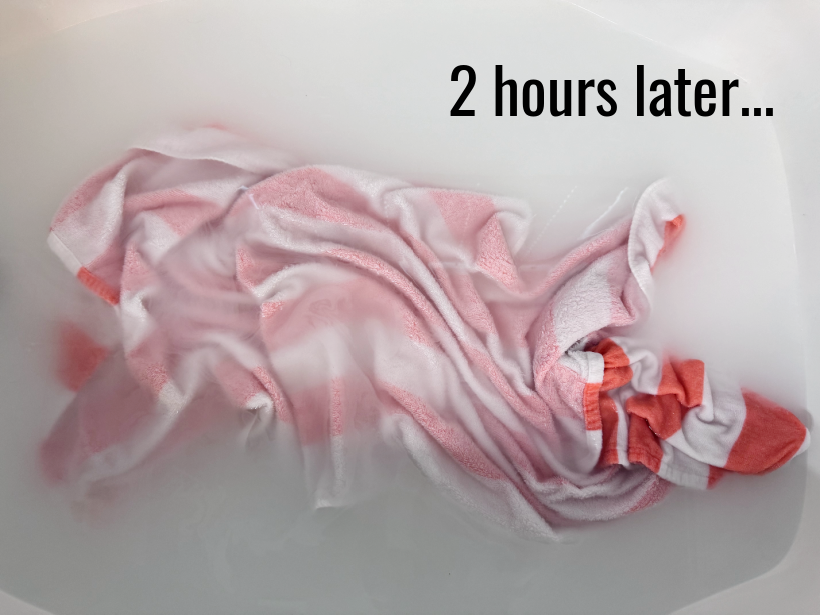
- Allow them to soak for 2 to 4 hours.
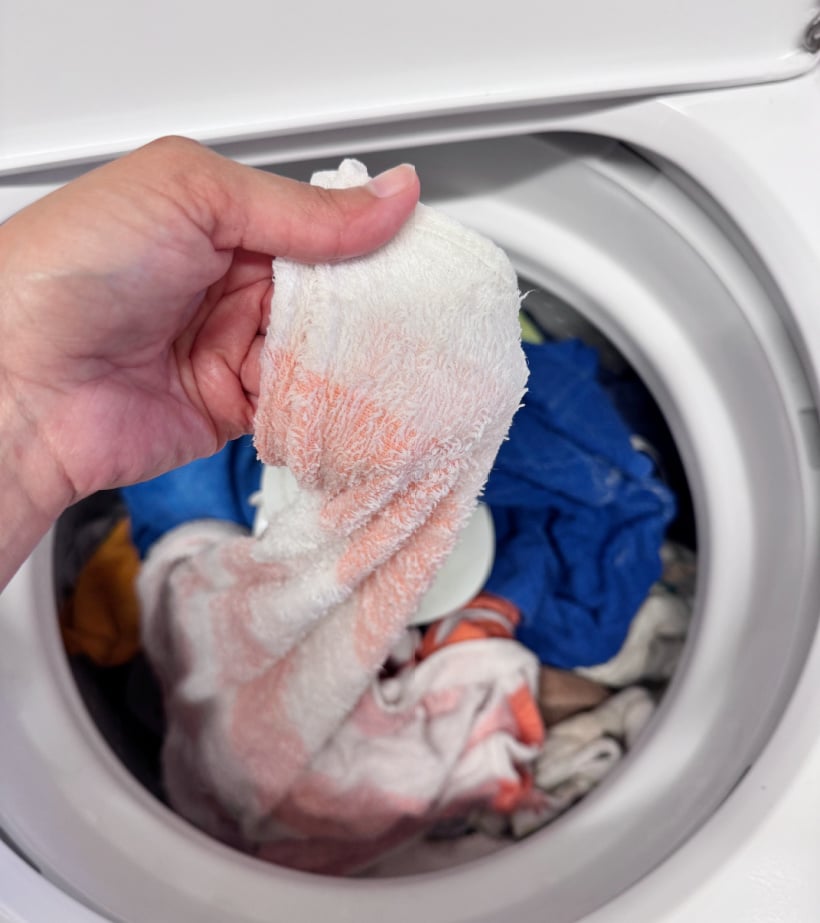
- Drain the water, squeeze out the excess water from towel (no need to rinse), and wash the towels normally with your regular detergent.
- Dry completely before folding or storing.
- Bonus tip: utilize the sun’s UV rays for additional odor removal
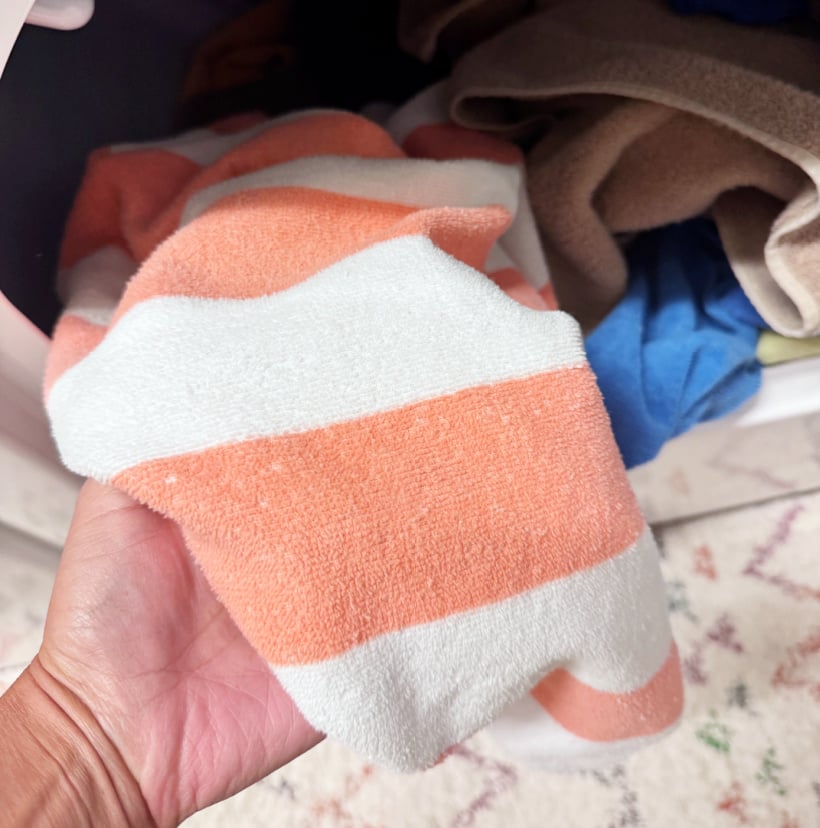
In my experience, most towels show a noticeable improvement after a single soak. Towels with years of buildup or severe odors may benefit from a second treatment before they return to their freshest condition.
Why Towels Develop Musty Odors
Many people assume that if a towel has been washed, it should smell clean. Unfortunately, that is not always the case.
Towels are designed to absorb moisture, which means they also absorb body oils, skincare products, soap residue, and minerals from hard water. Over time, these substances can become trapped within the fibers.
When buildup accumulates, it can hold onto moisture longer and make it easier for odor-causing bacteria to thrive. Even after washing, those trapped residues can leave towels smelling stale or musty.
One of the biggest causes of towel buildup is actually using too much detergent. Excess detergent can remain behind after the rinse cycle and gradually collect within the fibers. Fabric softener can create similar problems because it coats towels and reduces their absorbency.
Why Washing Soda Works
Washing soda, also known as sodium carbonate, is a powerful cleaning booster that helps raise the pH of water. There is a difference between baking soda and washing soda, for this recipe, it is best to use washing soda for results.
From a chemistry perspective, the higher pH helps break down oily residues and loosen detergent buildup that may be trapped inside the fibers. It can also help soften hard water, allowing the wash cycle to clean more effectively.
When these residues are removed, the odors associated with them are often removed as well.
Many people are surprised by how much fresher their towels feel after a simple washing soda soak.
Another Tip: Use an Enzyme Laundry Booster Occasionally
If your towels are heavily used or continue to develop odors over time, an enzyme laundry booster can also be helpful as part of your laundry routine.
While washing soda is excellent for removing detergent residue, body oils, and mineral buildup, enzymes work differently. Laundry enzymes are designed to break down organic materials such as sweat, body oils, proteins, and other residues that can become trapped in towel fibers.
I like to use an enzyme booster occasionally, especially on bath towels, workout towels, or kitchen towels that see a lot of use. Think of it as a deep-cleaning treatment that targets the organic buildup regular detergent may miss.
As a chemist, I appreciate that washing soda and enzymes work in different ways. Washing soda helps loosen and remove residue through its cleaning and water-softening properties, while enzymes actually break down certain types of organic matter into smaller pieces that can be washed away more easily.
You don’t need to use an enzyme booster with every load, but adding one every few weeks or once a month can help keep towels fresher and maintain their absorbency over time.
What If the Smell Remains?
If your towels still smell musty after trying a washing soda soak, the towels themselves may not be the only source of the problem.
Consider checking for:
- Mold or mildew buildup in the rubber gasket of a front-load washing machine
- Towels that are not drying completely between uses
- Overloading the washing machine, which can prevent proper rinsing
- Excessive detergent use during routine washing
- Older towels with severe mildew damage that may be difficult to fully restore
Sometimes addressing these underlying issues is necessary to permanently eliminate persistent odors.
How to Keep Towels Smelling Fresh
After restoring your towels, a few simple habits can help prevent odors from returning.
Allow towels to dry completely between uses whenever possible. Damp towels left in piles or on the floor can quickly develop odors.
Avoid using excessive detergent. More detergent does not always mean cleaner laundry. In fact, too much detergent often contributes to buildup.
Skip fabric softener on bath towels. While it may make towels feel softer initially, it can leave behind a coating that traps odors and reduces absorbency over time.
If you have hard water, consider doing a washing soda soak every few months to help prevent mineral deposits from accumulating.
Dry towels out in the sun which is very effective at removing odors completely.
Frequently Asked Questions
What about the vinegar method in a wash cycle?
A popular DIY odor removal in towels is adding 1 cup of vinegar to a hot wash cycle. While this can work for basic cleaning, vinegar dilutes in a washing machine quickly as water fills up. It is more effective soaking a towel in a bathtub or large bucket to control the amount of water and dilution.
Can I use baking soda instead of washing soda?
Baking soda can help reduce odors, but washing soda is generally more effective for removing detergent residue, body oils, and hard water mineral buildup. Learn the difference between baking soda and washing soda.
How often should I do a washing soda soak?
For most households, every few months is sufficient. If you have hard water or heavily used towels, you may find that more frequent treatments are helpful.
Will washing soda damage towels?
When used as directed and followed by a normal wash cycle, washing soda is generally safe for most cotton towels. Always follow the care instructions provided by the towel manufacturer.
Can I use this method on colored towels?
Most colorfast towels tolerate washing soda well, but it is always a good idea to check the care label and test an inconspicuous area if you have concerns.
Safety Note
Washing soda is a useful household cleaning product, but it should be handled according to the manufacturer’s directions. Avoid getting it in your eyes, wash your hands after handling, and store it out of reach of children and pets.
Final Thoughts
If your towels still smell musty after washing, the problem is often hidden buildup rather than dirt. This simple DIY washing soda soak can help remove residue, improve absorbency, and restore freshness to towels that seem impossible to clean.

About the Author
Alexis Rochester is an investigative chemist and mom of two who enjoys helping families solve everyday household problems using practical, science-backed solutions. Through her writing, she breaks down the chemistry behind common cleaning, laundry, skincare, and home care challenges into easy-to-understand advice that busy moms can actually use. When she’s not experimenting with cleaning methods or researching household products, she’s spending time with her family and tackling the never-ending laundry pile.

Chemistry Hacks For Home and Outdoors
Quick hacks to save time, money, and eliminate unnecessary chemicals!
An easy to use eBook full of over 30+ DIY solutions for cleaning inside and out!