

One of the most common kitchen odor problems is the smell coming from the sink, and it usually isn’t caused by dirty dishes. As a chemist, I know most drain odors come from bacteria feeding on tiny food particles stuck inside the drain pipe. As they break that material down, they release unpleasant odor compounds.
Instead of using harsh cleaners, I use this simple 1-minute drain deodorizer made with ingredients many people already have at home.
👉If you would like to sign up for the monthly newsletter, be sure to subscribe here (we only send out one email per month on the 1st of each month).
My 1-Minute Drain Deodorizer:
What You Need
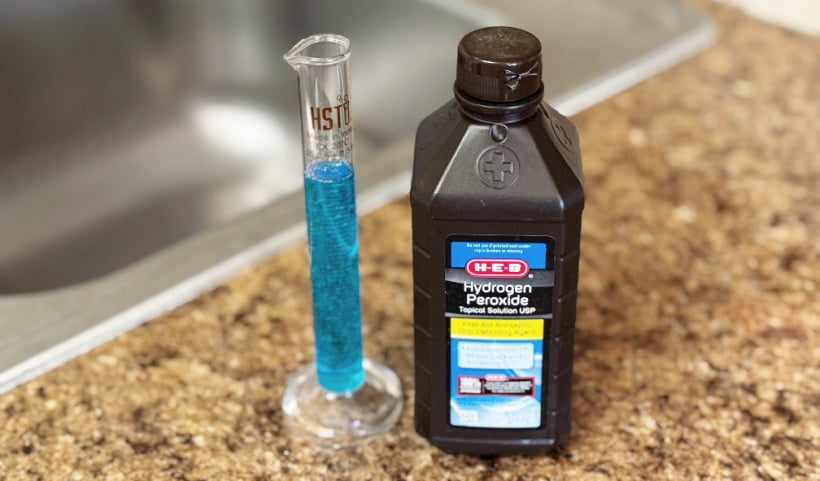
- 1 cup 3% hydrogen peroxide
- 1 teaspoon liquid dish soap
- hot water
Step 1
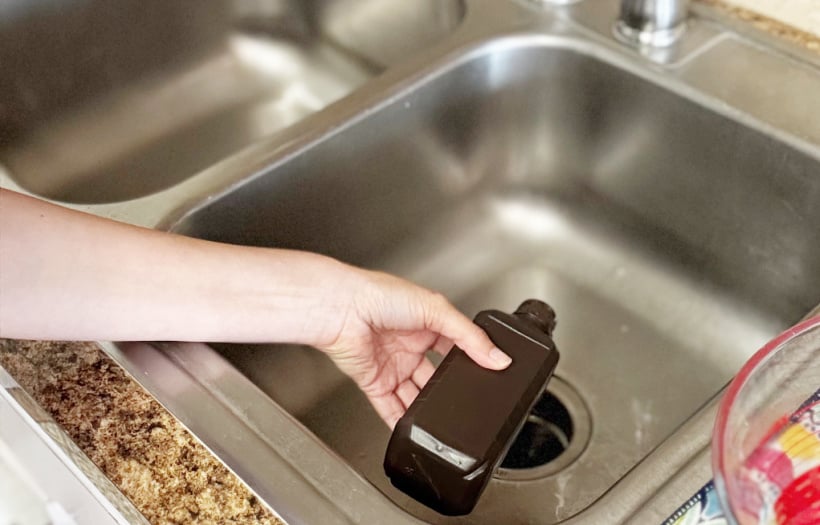
Pour the hydrogen peroxide directly down the drain. Hydrogen peroxide releases oxygen that helps break down organic material and reduce odor-causing bacteria. Let it sit a few minutes.
Step 2
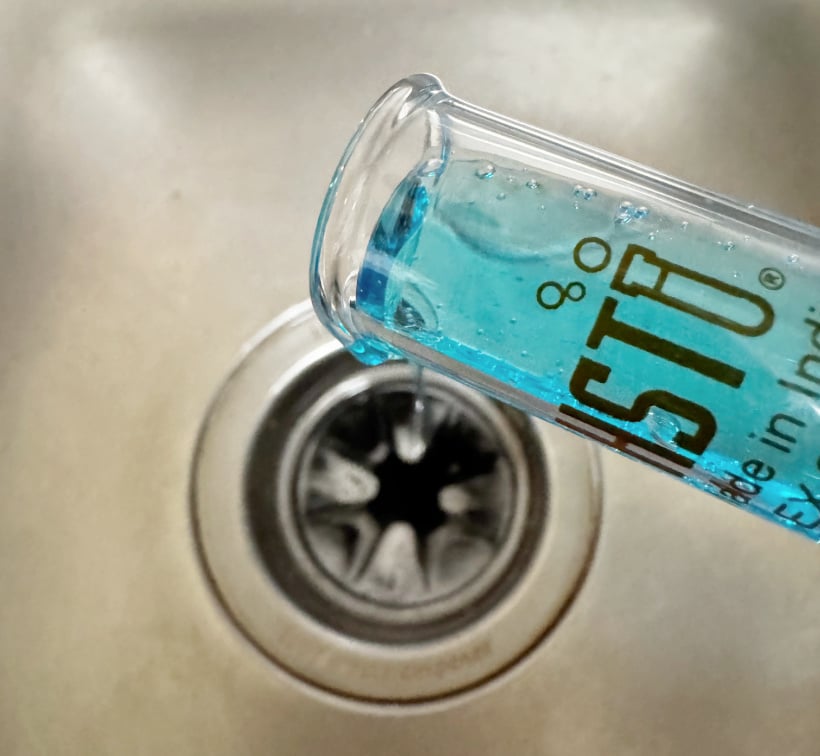
Add the dish soap. The soap acts as a surfactant that helps loosen grease and food particles stuck to the pipe walls.
Step 3
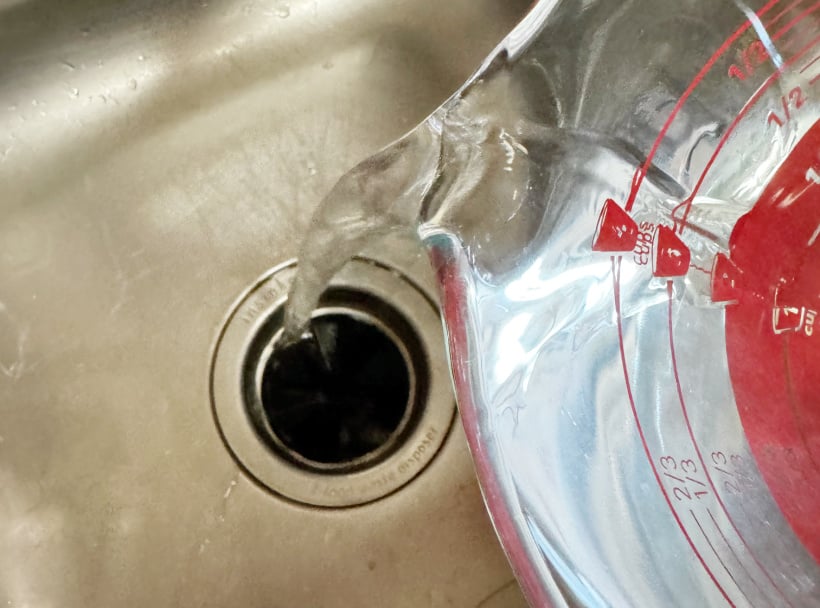
Let it sit for about one minute (you can let it sit up to 10 minutes if you have a really smelly drain). Then flush the drain with hot water.
Most of the time, the odor disappears immediately.
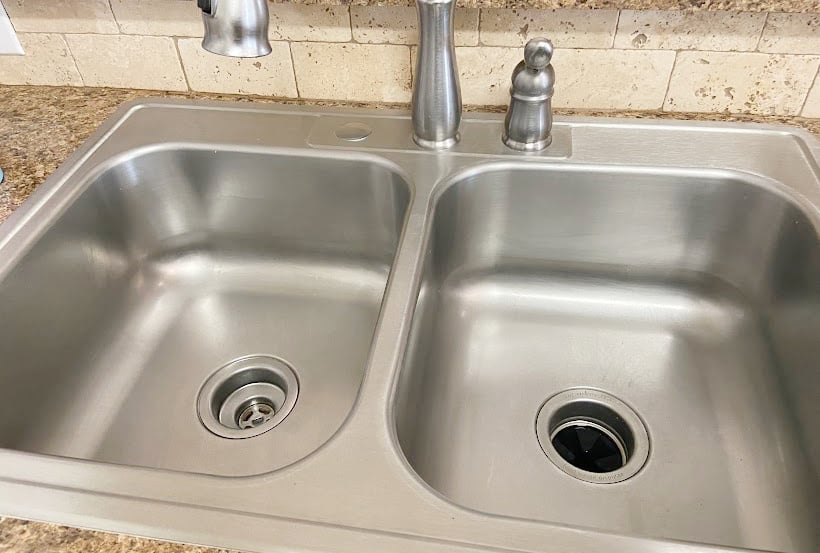
Why Drains Start to Smell
Even if you rinse your sink well, small amounts of food residue, grease, and soap can stick to the inside of the pipe.
Bacteria begin breaking that material down, which produces sulfur-like odors.
The trick is to use something that can break down the organic residue while also reducing odor-causing microbes. While I love vinegar for many odor neutralizing methods, like the garbage disposal, I think the hydrogen peroxide is a really great addition to your drain.
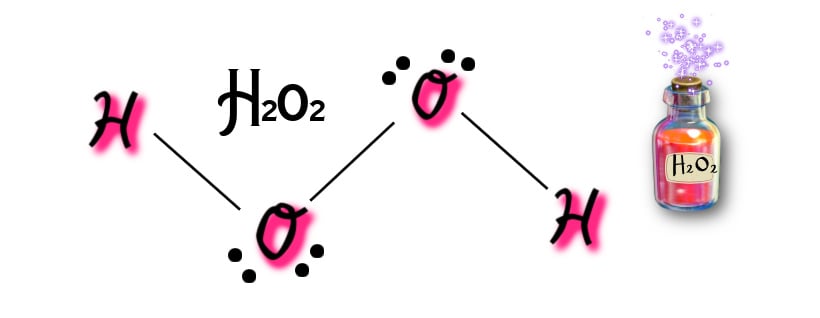
Why This Works (The Chemistry)
Hydrogen peroxide is a mild oxidizer.
That means it helps break apart odor-causing organic compounds and reduces the bacteria producing them.
The dish soap lowers the surface tension of the liquid, allowing it to spread along the inside of the drain and lift away greasy buildup.
Together they help clean and deodorize the drain at the same time.
Extra Chemist Tip
If your kitchen drain tends to smell often, doing this once a week can help prevent buildup from forming. Another really hand chemist tip is to check out an enzyme based drain cleaner! This is a great tip for slow draining sinks when you want to avoid harsh drain cleaners (which actually can backfire on your making the situation worse). Enzyme drain cleaners break down organic matter deep in the pipes.
You can also rinse the drain with hot water after cooking to keep grease from sticking inside the pipe. I also recommend checking out a few of our sink cleaning methods to use along side this drain cleaner for the cleanest kitchen sink.
Why Not Add Baking Soda?
Many readers raised concern about why I don’t add baking soda to this mixture. For those asking and needing some extra chemistry here is the background to the “reaction” between hydrogen peroxide and baking soda plus why it is better suited in a paste.
Hydrogen peroxide (H₂O₂) and baking soda (NaHCO₃) do not undergo a strong, direct reaction with each other. Instead, hydrogen peroxide slowly decomposes on its own into water and oxygen gas, while baking soda acts as a mild base that helps stabilize the mixture. The primary chemical process taking place is the natural breakdown of hydrogen peroxide:
2H2O2→2H2O+O22H2O2→2H2O+O2
You may notice gentle bubbling from the release of oxygen gas, but baking soda is not significantly consumed in this process. In cleaning, this combination works through oxidation from hydrogen peroxide and odor neutralization from baking soda rather than a strong chemical reaction between the two.
In contrast, baking soda and vinegar create an immediate and visible reaction because they undergo a true acid–base reaction. Vinegar (acetic acid, CH₃COOH) reacts with baking soda to form carbon dioxide gas, water, and sodium acetate, which produces rapid fizzing:
NaHCO3+CH3COOH→CO2+H2O+CH3COONa
This reaction is quick and vigorous but short-lived, and the bubbling is caused by carbon dioxide gas. While it looks powerful, it is mostly useful for loosening debris through agitation rather than providing long-lasting chemical cleaning effects.
Final Thoughts
Sometimes the best home solutions are simple chemistry.
This quick drain deodorizer is one of those easy tricks that keeps a kitchen smelling fresh without harsh cleaners.
Don’t miss our other cleaning hacks for your kitchen sink:
- Homemade kitchen sink scrub
- DIY Garbage Disposal Cleaner
- Sink Cleaning Hacks For The Sink and Rim of Drain


Chemistry Hacks For Home and Outdoors
Quick hacks to save time, money, and eliminate unnecessary chemicals!
An easy to use eBook full of over 30+ DIY solutions for cleaning inside and out!


















juleed1021@gmail.com
Hi JuLee! Is there anything I can help with, this comment just has your email. Did you want to be added to the monthly newsletter? Let me know!
Hi Alexis 🙂 I have an old house with steel drain pipes and mu understanding is that hydrogen peroxide will corrode steel Maybe a footnote is needed ⍰
Hi, thanks for your comment! The recipe uses 1 cup of hydrogen peroxide diluted with water. For a typical brief pass through the drain, that’s different from leaving metal in prolonged contact with a concentrated peroxide solution. Hydrogen peroxide does breakdown into water and oxygen once you rinse it. So, by the time it passes through the kitchen drain, it is going to be oxidized. We’ve checked this recipe with our plumber, and I always encourage readers to ask their own plumber if they have concerns about their particular pipes. I’m happy to answer any other questions!